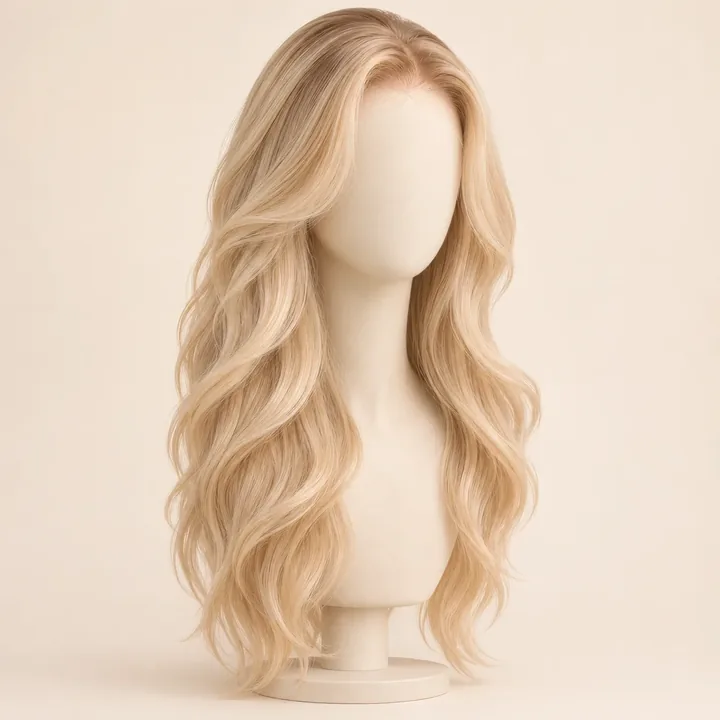


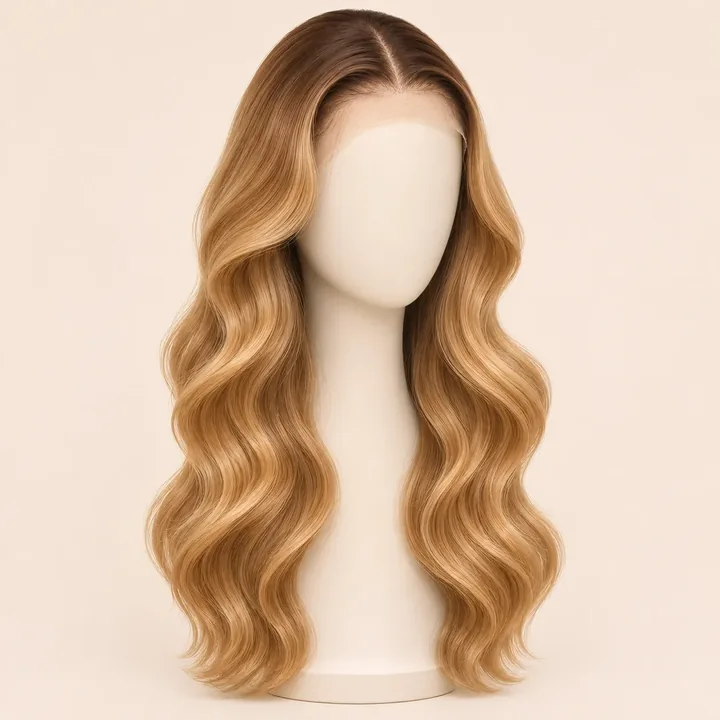
Lace Front
- Gives the wearer
- A hairline that can be worn off the face, each front hair into lace.
- You read on the sample
- Lace edge, knotting at the front, lace tone, how density thins toward the forehead.
- Photo view
- Hairline close-up.
Wig cap construction · a guide for wig stores
Lace front, monofilament, hand-tied and glueless each handle one part of a human hair wig: the hairline, the crown and part, the cap body and the hold. You combine them on one wig instead of picking a level.
Four features · four parts
Every wig cap has four parts that a wearer and a store judge. Each cap feature is responsible for one of them.
Adding a feature changes only its own part: a monofilament top changes the crown and leaves the hairline as it was, and glueless fitting changes the hold and leaves the hair as it was.

The cap construction field on your order is a list of features, not a single level. The combination you name is what the sample is made in, what the quote is priced on, and what every reorder is checked against.

One field · never a grade
Cap construction is supplied as features you combine, wig by wig. Caps are not sorted into basic, better and best, and no cap carries a grade name or number.
A store that wants a natural part on a light cap, but no lace front because the style has a fringe, has to move up a step and take features it does not need.
 Combined per wig
The same store orders a monofilament top on a hand-tied cap, on Wigs with Bangs, and nothing else.
Each wig carries only the cap features its wearer needs, and the combination stays the same from sample to every reorder.

Four features, combined per wig, never sold as grades.
Who reads the cap field
Each type of store uses the cap construction field in its own way.
On fair skin and under light blonde or gray hair, the hairline and the part are both easy to see, so that is where cap construction is judged first.
One style in more than one cap combination, so a client can choose between a lace front Lob with or without a monofilament top.

Clients often show thinning or no hair at the crown and wear the wig all day. The crown, the hold and the weight of the cap matter as much as the hairline, so all four parts are set on the sample.

You cut and fit the wig on the client. The lace front decides how much hairline you work with; the cap body decides how the hair moves after the cut.

A cap built around one client: her hairline, her part, her preferred fit.

Each cap combination in your line is its own SKU, with its own approved sample.
Several stores restocked, each line named by its cap combination.


Front · lace front
The lace front is the feature responsible for the hairline: a strip of lace at the forehead, with each hair at the front hand-knotted into it.
Styles worn with the forehead open rely on it most. On Wigs with Bangs and Curtain Bangs the fringe covers most or all of the hairline, so the lace front is optional on those styles.
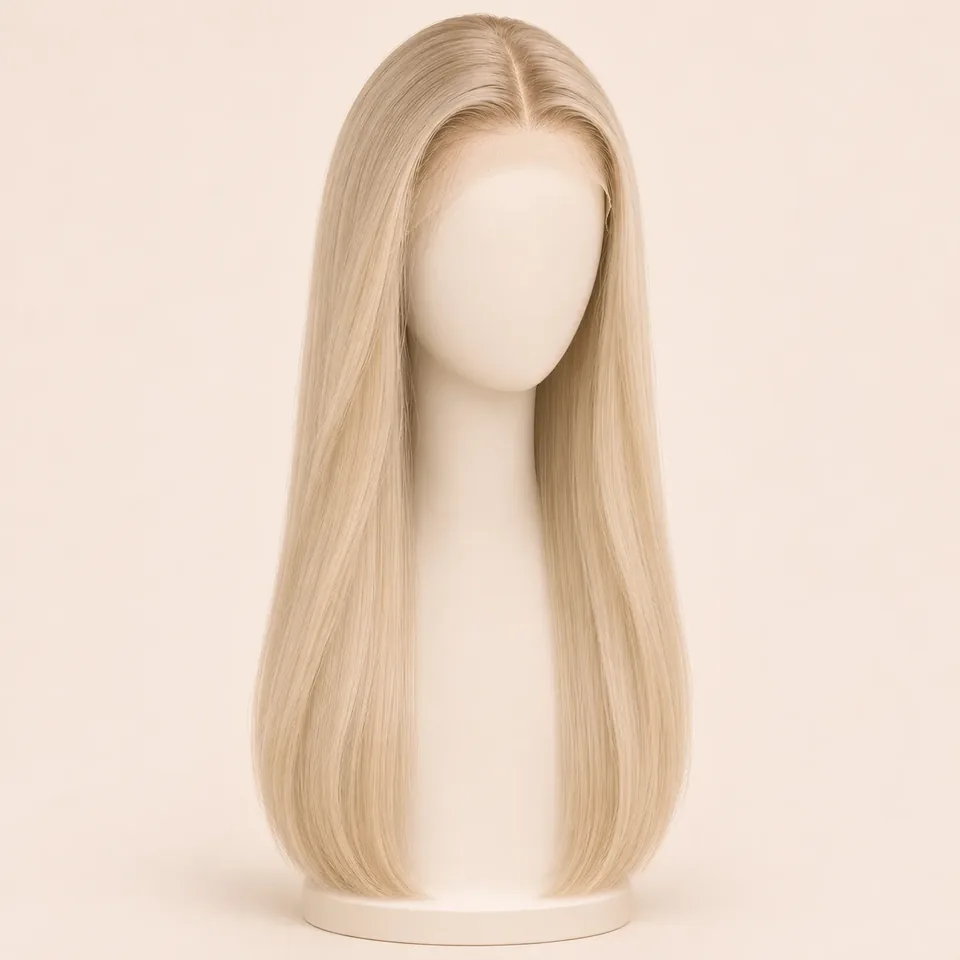 Straight with Layers
 Long Layered
 Natural / Loose Wave
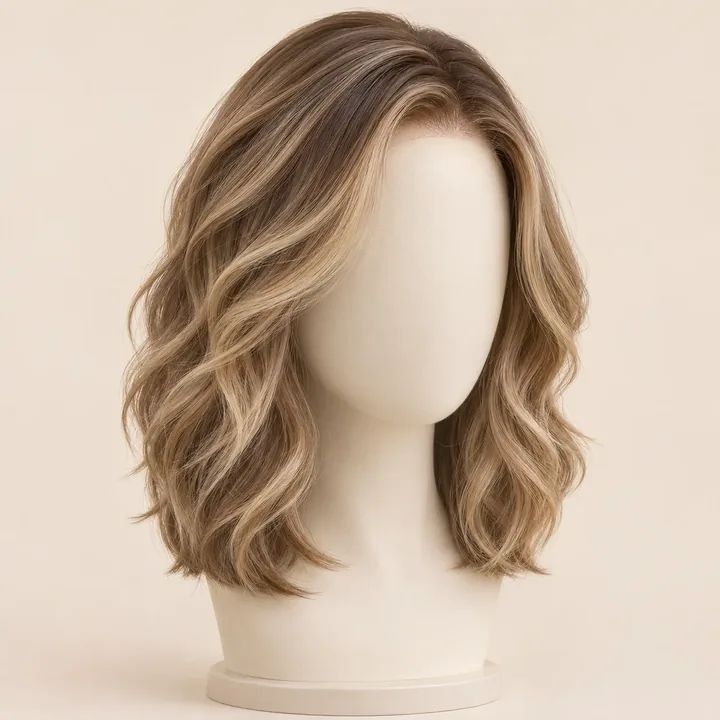
 Lob / Shoulder Length
 Bob
 Bangs · lace optional
Wigs with Bangs and Curtain Bangs: the fringe covers the hairline.
How the hairline is knotted, matched to fair skin and read on the sample: Lace Front Human Hair Wigs
Top · monofilament
The monofilament top is the feature responsible for the crown and the part: a fine mesh across the crown, or across the whole top of the cap, with hair knotted through it one by one.
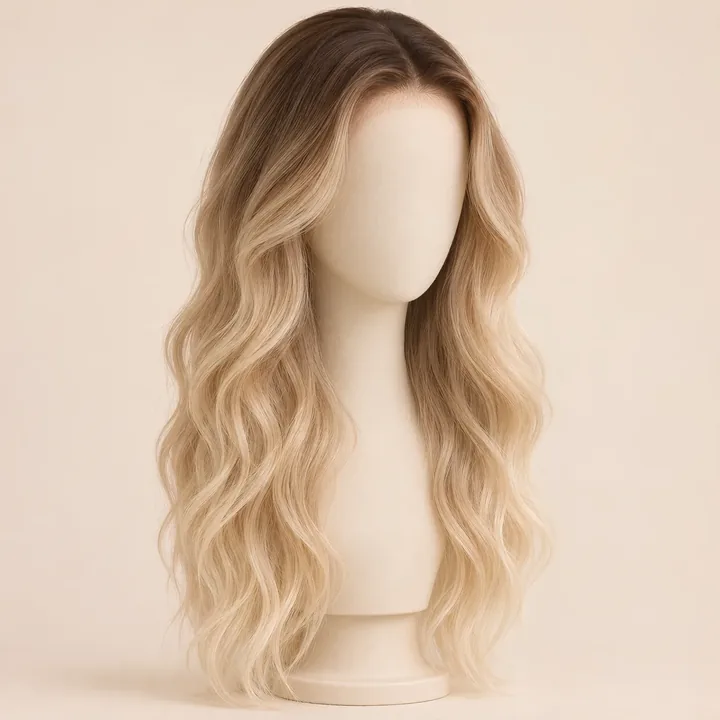
The part close-up in the sample's daylight photo set is the view you approve the crown on. If the part shows mesh or the scalp tone reads wrong, mark it under part; a revised sample follows with its own photo set, and you hold the old and new part close-ups side by side. Before dispatch, every mono top is checked at the part against that close-up.

Body · hand-tied
Hand-tied is the feature responsible for the cap body: the sides, the back and the nape. Each hair is tied into the cap by hand, strand by strand.


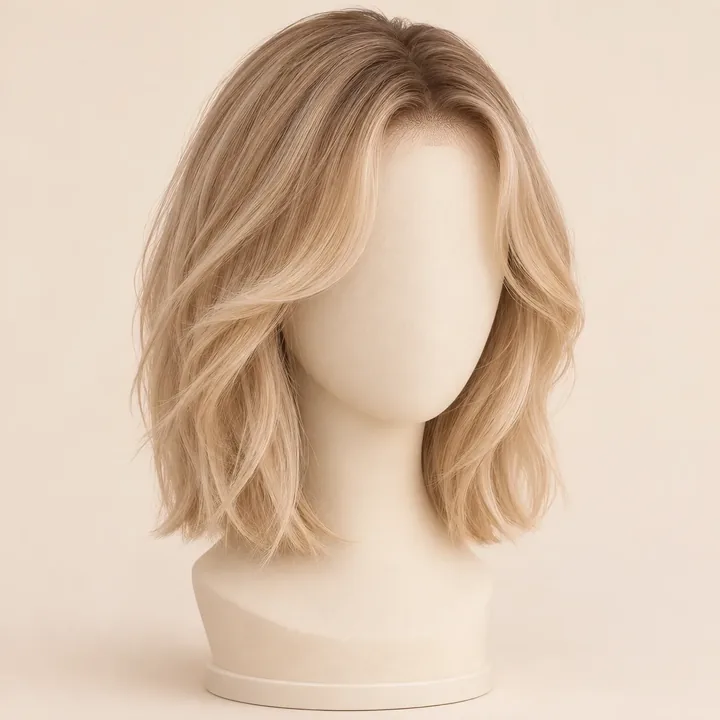
Read it by holding the sample, moving the hair at the sides and back, and checking the cap interior view.
Hold · glueless
Glueless is the feature responsible for how the wig stays on: the right cap size plus straps and clips, with no adhesive.
Adjustable straps sit inside the cap at the nape, so the fit can be tightened or eased on the wearer.
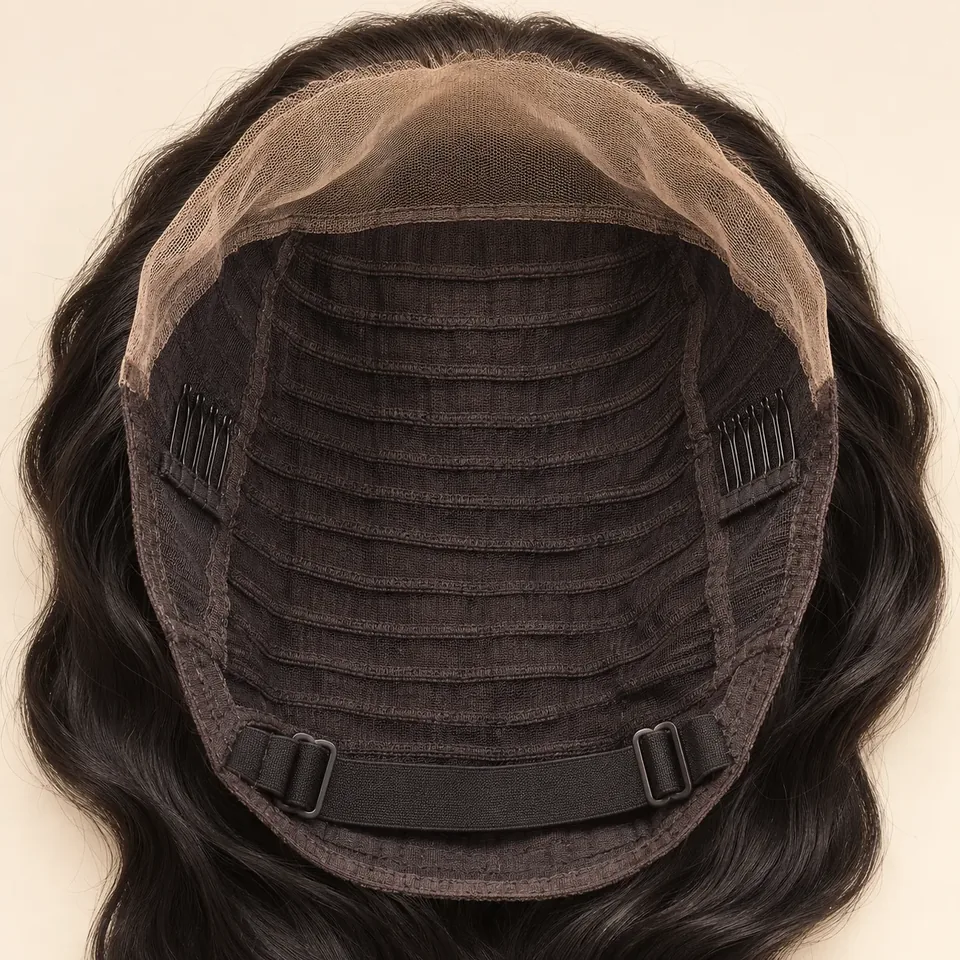
Elastic bands or clips are added to hold the wig in place without glue.
Confirmed per style from our supply data and written into the approved sample, as the field.
The straps only fine-tune the fit. They cannot make a wrong cap size right, so the size is read against the style before the sample is made.
Put the sample on your fitting head, or on a client in the store. If it sits loose or tight, mark it under fit; the revised sample is sized and strapped to your mark, with a new photo set.
A wig your client can put on in the morning without adhesive, fitted to the size and hold you approved. Glueless Human Hair Wigs

Give the style, shade and the cap features you want. Your sample arrives with hairline, part and cap interior views in its daylight photo set.

Side by side · not one or the other
The lace front and the monofilament top are the two features that make a wig look like the wearer's own hair. They handle two different places, so they are added side by side, not chosen one over the other.
| Point | Lace Front | Monofilament | Hand-Tied | Glueless |
|---|---|---|---|---|
| Part of the cap | The hairline at the forehead | The crown and the part | Sides, back and nape | How the wig stays on |
| How it is made | A strip of lace along the brow, hairs knotted one by one into it | A fine mesh over the crown or whole top, hairs knotted through it | Each hair tied into the cap by hand, strand by strand | Cap size plus straps, elastic bands or clips, no adhesive |
| What it lets the wearer do | Wear the hair off the face, hairline visible | Part the hair in any direction, part reading as scalp | Wear a lighter, softer cap with hair moving freely | Put the wig on and take it off without glue |
| Styles that rely on it | Open-forehead styles: Straight with Layers, Long Layered, Natural / Loose Wave, Lob, Bob | Styles with a visible part: Curtain Bangs, Long Layered, Straight with Layers, Lob | Longer, fuller styles: Long Layered, Natural / Loose Wave | Any style worn daily without adhesive |
| What can make it look like a wig | A lace edge that lifts, a dark row of knots, lace darker than the forehead, a front that is too even | Mesh showing at the part, a scalp tone that reads wrong | Hair falling in rows instead of freely | A wig that sits loose or tight |
| Set on your sample | Lace tone for the skin you describe, front density, trim state | Crown or full top, part position | How the hair falls at the sides and back | Cap size, straps, bands or clips |
| Photo view you approve it on | Hairline close-up | Part close-up | Cap interior, and the wig in your hand | Cap interior, and your fitting head |
| Checked before dispatch | Lace edge and how density thins toward the forehead | Part moves freely, no mesh showing, part reads as scalp | Cap interior against the hand-tied cap body | Straps, bands or clips and the size label |
A style worn with the forehead open and a visible part, such as Long Layered, Straight with Layers or a side-parted Lob. The lace front makes the hairline, the monofilament top makes the part, and the sample shows where the two meet.
A fringe style with a visible part, such as Curtain Bangs, can carry a monofilament top with the lace front optional. A style worn swept back with no part on show relies mainly on the lace front.
Combinations · any order you need
Any feature can go with any other. These combinations show how the four parts of the cap are covered on different wigs.

Open-forehead styles worn without a set part.
Sample this combination
An open forehead with a visible part.
Sample this combination
Fringe styles with a part, on a light cap.
Sample this combination
Daily wear with a part, no adhesive.
Sample this combination
Full-day wear after hair loss, often on a fringe style.
Sample this combination
A natural hairline on a light cap worn without glue.
Sample this combination
A natural hairline and part on a light cap with no glue.
Sample this combinationThe feature is not on that wig. That part of the cap is built as set for the style in our supply data, and you see it on the sample's cap interior view before you approve.
Combinations outside these are made the same way. A Bob with only glueless fitting, or Wigs with Bangs with only a monofilament top, is written into the cap field and sampled like any other wig.

Your sample · part by part
Every cap combination starts as a sample (the sample process is covered on our home page). On cap construction, you confirm it part by part, in this order:
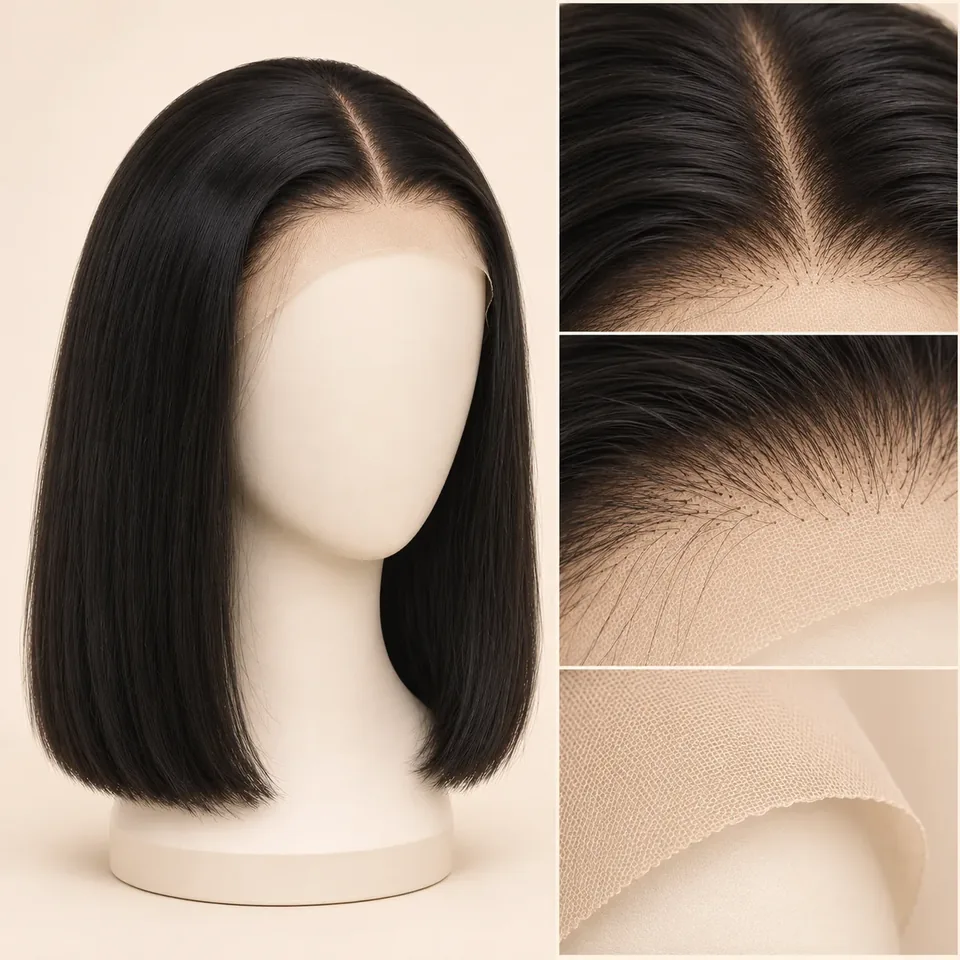 Hairline, on the hairline close-up.
 Crown and part, on the part close-up.
 Cap body, in your hand and on the cap interior view.
Name the point (hairline, part, cap or fit), say what to change, and point to the photo view where you see it. The revised sample changes only the points you marked and comes with a new daylight photo set.
"Part: mesh showing at a left part, see part close-up."
Ask for the same Lob in Ash Blonde with a lace front only, and with a lace front and monofilament top. Each combination gets its own sample wig and photo set, approved on its own; once approved, it is fixed for bulk.
You know how every part of the cap looks and fits before you order, and the wigs that arrive match it.

Plan which cap combinations to carry across your styles and shades with your wig specialist, one wig at a time.
 One wig at a time
Reorders · one reference per combination
Your cap combinations stay fixed until you decide to change them.
 Reordering
Name the style, shade and cap combination of the approved sample. Before the reorder ships, every wig is compared with the reference wig we keep of that sample and its daylight photo set, cap construction included.
Repeat orders go back to the same partner workshop wherever we can. How the reference archive works
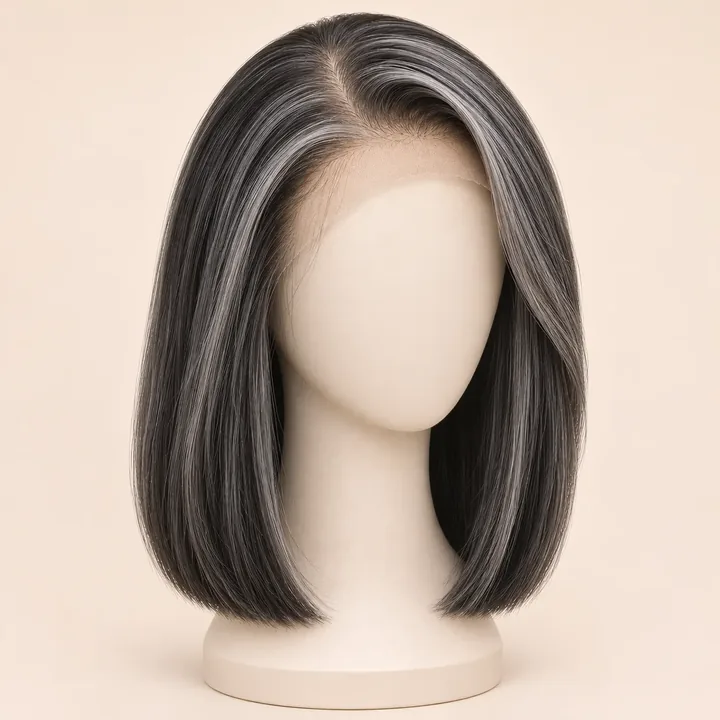
Adding a monofilament top to a lace front Lob counts as a style change: the new combination is sampled and approved first, then goes into bulk.
The new combination gets its own reference wig, filed beside the earlier one under your store, style, shade and cap combination. The earlier one is not affected.

A wig whose cap differs from the approved sample is held back. Your wig specialist shows you photos of it, then it is remade or replaced to match.
The second and tenth wig of a combination carry the hairline, part, cap feel and fit of the first.
Combined vs tiered
How cap construction from us compares with a typical tiered cap listing.

| Point | Human Hair Wigs Supplier | Typical tiered cap listing |
|---|---|---|
| How caps are offered | Four features combined per wig, to your order | Fixed cap levels, each with a set bundle of features |
| Grade names | None. The cap is described by its features | Cap levels named as grades or tiers |
| What you judge the cap on | Your own sample, with hairline, part and cap interior shown in daylight | Product photos of a finished stock item |
| Lace tone and fit | Set for the skin tone and size you describe, adjustable before approval | As the stock item was built |
| Reorders | Cap combination checked against our reference wig | Reordered by level name |
Quote · one line per wig
A cap construction quote is built from the items on this card; paste them into your request as a list.
Each new combination is quoted for bulk once its own sample is approved. Wigs already approved are quoted by name.

Start here
Pick the cap features for each wig, then choose where to begin.
List each wig with its cap features. Each sample comes with hairline, part and cap interior views in daylight.
Plan which cap combinations go on which styles in your range, or build a cap around one client.
List each wig with its cap combination, your store type, quantity estimate, destination and reorder plan.

