Blondes
- Colors in the hair
- One tone, root to ends.
- What separates the shades
- Warmth (how much gold or gray) and depth (how light).
- Read on the sample
- Frontfor the face, Sidefor the lengths.
Wig color chart · for stores choosing shades
A shade on a screen is a starting point. The shade you stock is the one you approve on a sample wig, in daylight, next to your client or her hair.
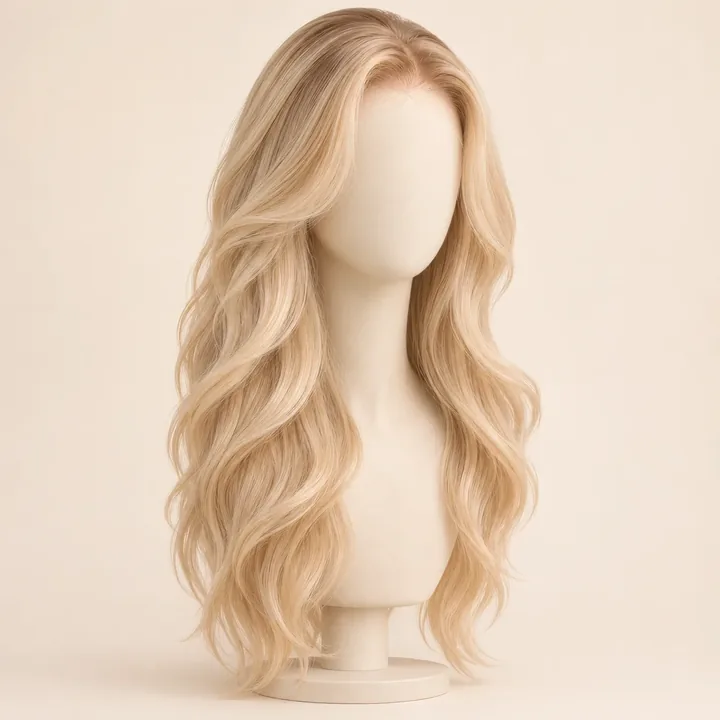 Champagne Blonde
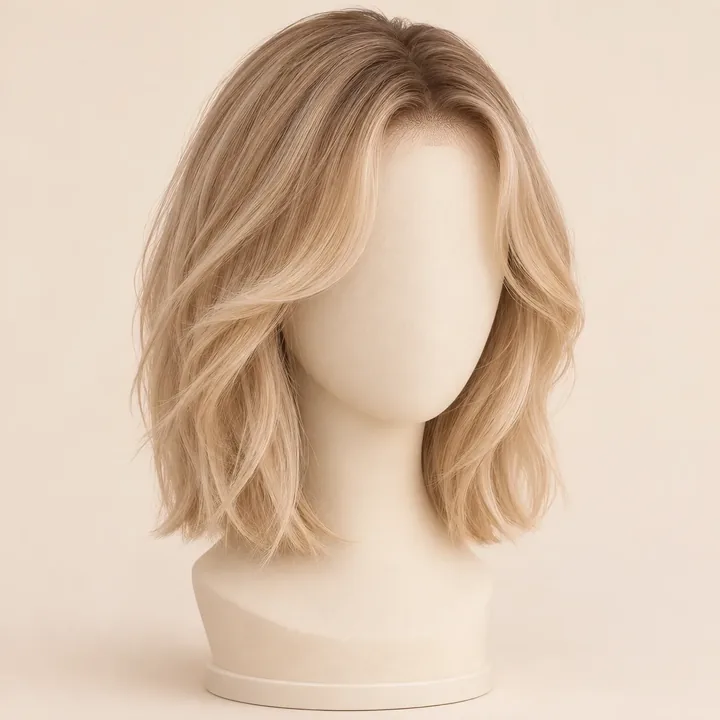 Beige Blonde
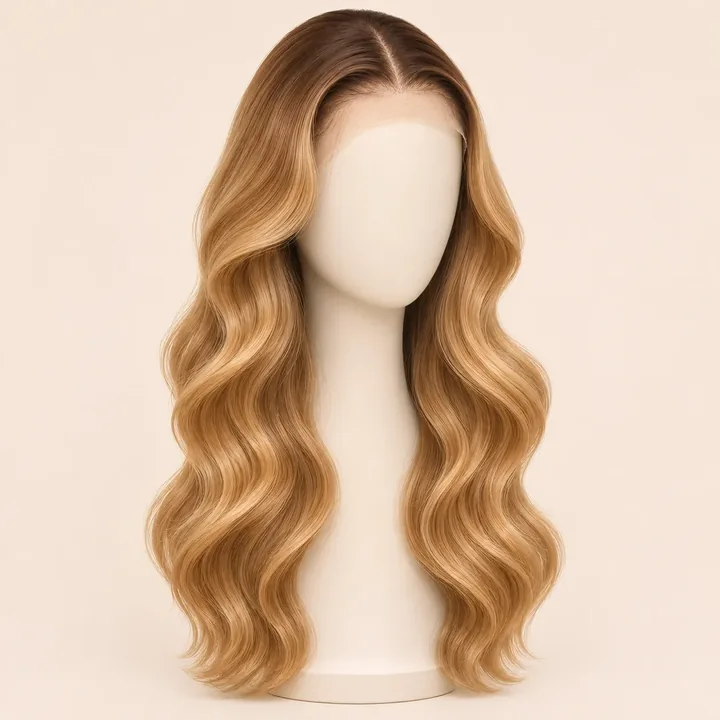 Honey Blonde
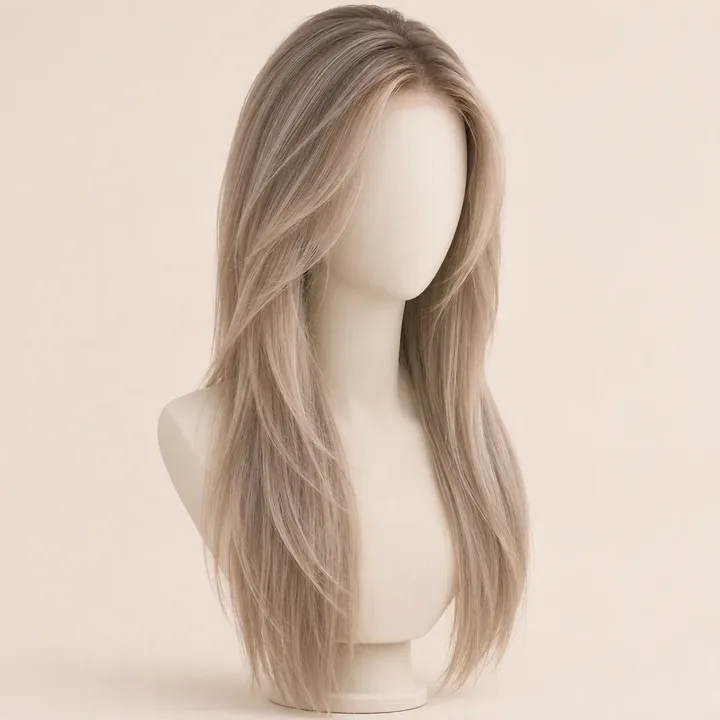 Ash Blonde
Rooted & blended
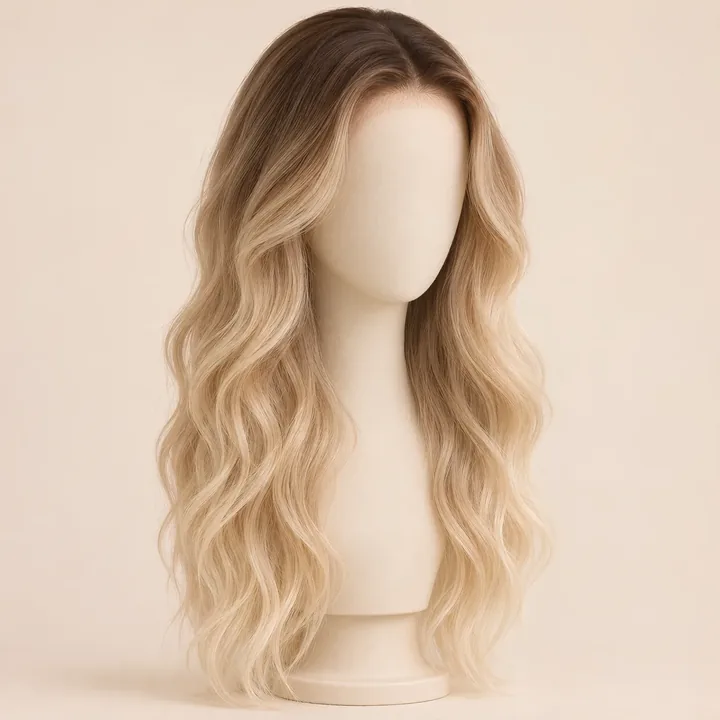 Dark Root Blonde
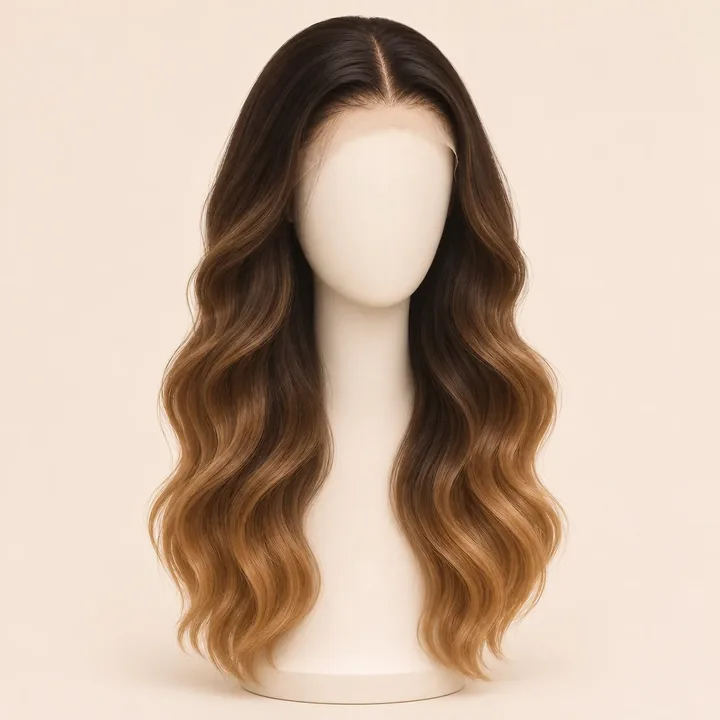 Caramel Balayage
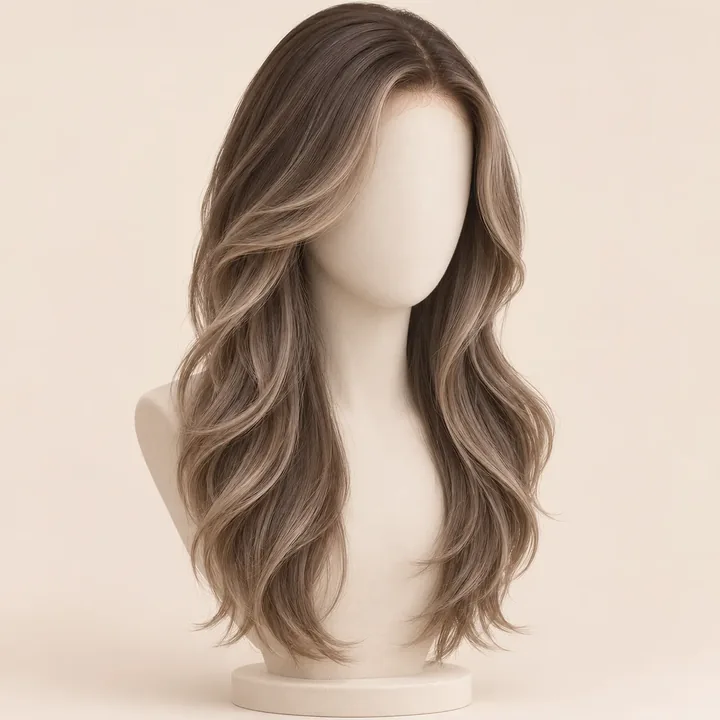 Ash Brown Balayage
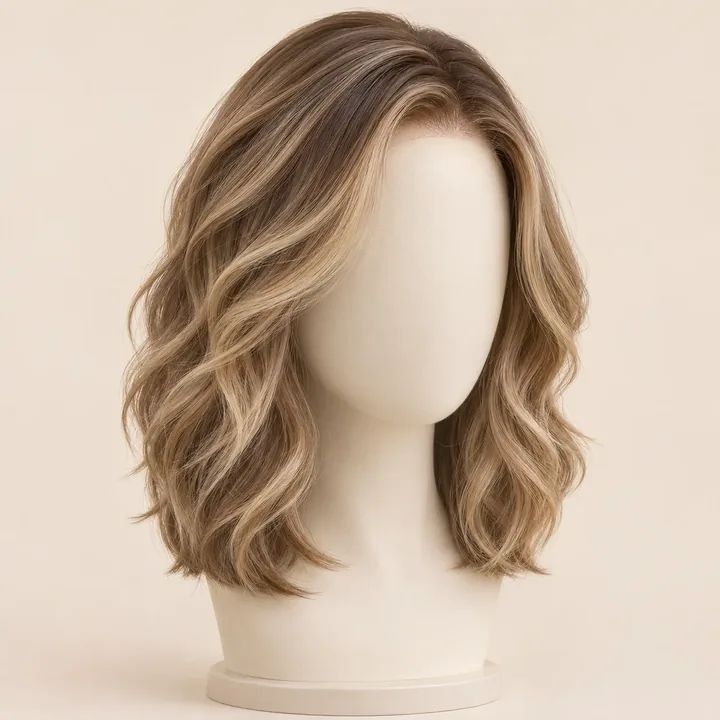 Bronde
Brunette
 Chocolate Brunette
Natural gray
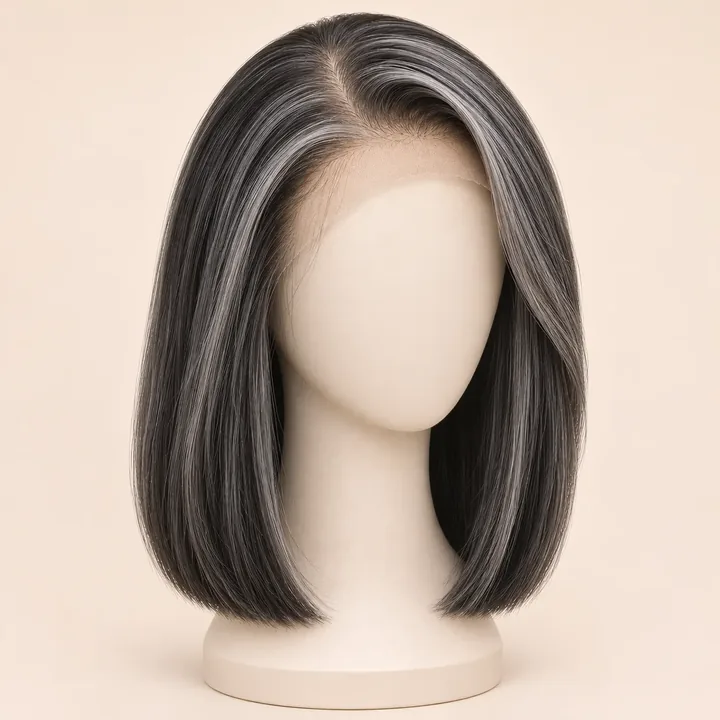 Grey / Salt & Pepper
Not on the chart
 Matched from her hair · filed under your number
Ten focus shades · four families
Each shade: its tone, the clients it suits and its family page. Tick the ones to sample.

Pale blonde with a soft warm, beige-gold cast.
SuitsVery fair skin, warm or peach undertones, gray starting to come in.
Neutral, sandy blonde between warm and cool.
SuitsPink undertones, very pale skin, a client torn between warm and cool.
Warm, golden blonde, a step deeper than Champagne.
SuitsFair skin with golden or peach undertones.
Cool blonde with a gray, silvery cast and no visible gold.
SuitsPink or ruddy undertones, and clients whose gray is coming in.
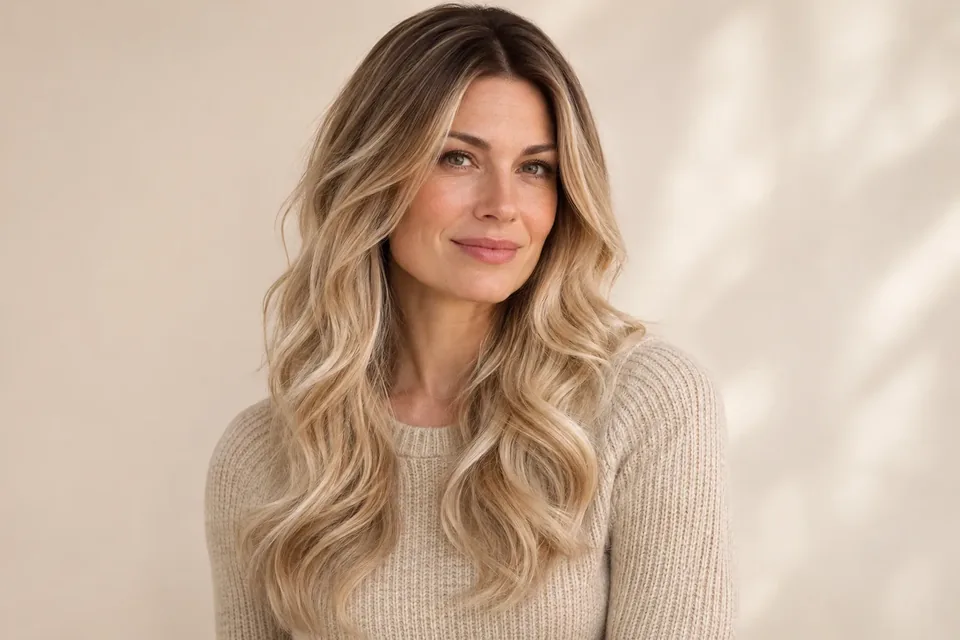
Blonde lengths over a deeper root. Covered on Blonde Human Hair Wigs.
SuitsClients who want blonde with a natural-looking root at the part.
A deeper brown root lifting into warm caramel lengths.
SuitsMature clients who want brightness around the face.
A deeper root lifting into cool, smoky brown lengths.
SuitsClients who find caramel too warm; a soft root suits mature clients.
Brown and blonde blended through the lengths over a softly deeper root.
SuitsDimension without an obvious lighter end.

A rich, deep brown, one tone from root to ends.
SuitsClients whose own hair is brown and who want to keep it.

Gray mixed with darker strands, made as a lighter or deeper mix.
SuitsWomen who wear their natural gray.
Between named shades, the color is matched from your client's hair, her current wig or an approved sample.
Remote shade matchingLength, density and cap size are confirmed per style from our supply data.
Who uses this chart
The stores that use this chart are deciding shades for women they fit in person.
Plan a try-on shelf across families, so a client can compare a warm and a cool shade in the mirror.
Look for the shade she wore before hair loss, then match it from her hair or current wig when no name is close.
Pick a shade that sits right against her brows and skin before they cut the wig on her.


Use the chart as the nearest named shade, then build the exact color from the client's own hair.
Pick the shades for a line sold under their own name, each fixed by its own approved sample.
Choose the shades to carry for the stores they supply, every restock held to the same reference wig.
One tone · two colors · a mix
The families differ in how many colors sit in the hair, which decides what you check on each sample.
A one-tone sample settles one color. A rooted shade or gray mix settles two and how they sit together, so put the transition or gray placement on your request with the shade name.


What you get: you know which shades need one decision on the sample and which need two.
Undertone · her color now · gray coming in
The ten shades map onto the clients your store fits in three ways. Choose her situation and the chart re-sorts.

When a client sits between two shades, request both on the same style and decide with the two wigs in front of her.
Request these shades
The one brown on the chart
A rich, deep brown carried in one tone from root to ends, with no blonde blended through it. The shade for a client whose own hair is brown and who wants her wig to look like it.

All 7 launch styles, with any mix of lace front, monofilament top, hand-tied cap and glueless fitting.
Bronde adds blonde through the lengths.
Ash Brown Balayage adds cool, lighter lengths over a deeper root.
Both on Balayage Wigs
Deep brown contrasts with fair skin at the hairline and part, so the lace and mono scalp color are chosen from the skin tone you describe and read in daylight.

Read it in the front and side views by a window. If it is off, mark the direction and the view:
Chocolate Brunette: lighter, side viewBetween her brown and this one? Send a lock or her current wig.
What you get: one brown on your shelf, approved by you in daylight and held to its reference wig on every reorder.


Request Samples
Put two shades from the chart on the same style, such as Ash and Beige Blonde, or Chocolate Brunette and Bronde. Each comes back as its own sample wig with its own daylight photos.
Daylight approval
A color chart on a screen depends on the screen, the light in the photo and any filter used on it. So the chart tells you which shades to sample, and the shade itself is settled on a sample wig you hold in natural daylight.
Every sample wig leaves us with a set of unfiltered daylight photos, described on our home page. The sample & photo desk leaves color as shot: a sample that came out warmer, cooler, lighter or deeper than its name shows it in the photos, and you mark it.

| Family | Under warm indoor light | In direct sun or through a filter |
|---|---|---|
| Blondes | Ash can look like Beige, Champagne like Honey, Honey turns brassy; Beige moves least. | Direct sun lifts every blonde lighter; filters push it warmer, cooler, lighter or deeper. |
| Rooted and blended | Dark Root Blonde loses contrast between root and lengths. | The transition can look softer or harsher than it is. |
| Brunette | Read in daylight like every other shade. | A filter can push the brown warmer or deeper. |
| Natural gray | Gray strands can look yellow. | Direct sun makes gray look whiter. |
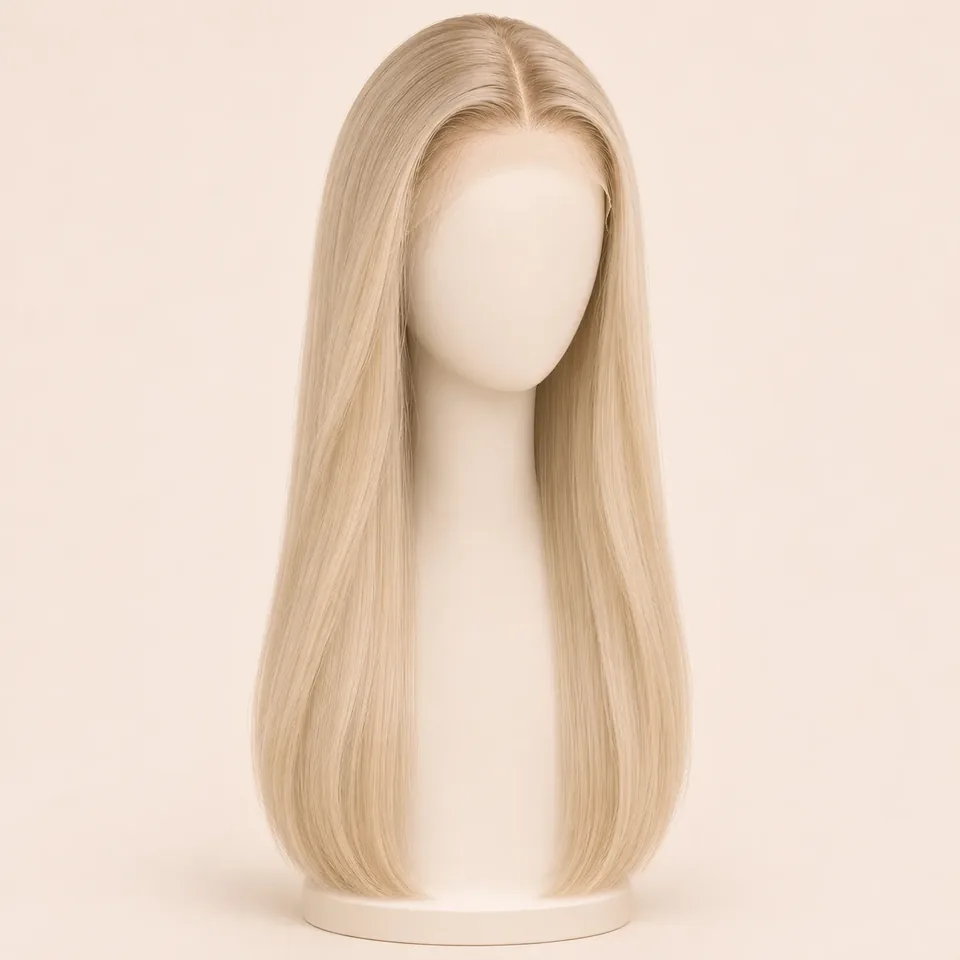
Once approved, those photos are filed with our reference wig of that shade, and every reorder is compared in the same views.
The shade your client sees outdoors is the shade you approved.


Label it with your store name and reference number; the wearer's name is not needed.
Not on the chart
When no shade is close enough, it is matched from physical hair: a lock of your client's hair, a wig she wears now, or an approved sample of ours you already hold. The steps are on our home page; posting a reference is on Contact.
For a shelf serving many clients, or when a named shade is close and a mark on the sample closes the gap.
When the wig has to sit with one client's own hair, or she wants the color of a wig she already wears.
A shade your client recognizes as her own, set from her hair instead of a picture of it.
Named · matched · not used
What you can order outright, what needs one more line on the request, and what never sets a shade.
Every route ends in the same place: a sample wig you approve, which becomes the approved sample for that style, shade and cap combination.
What · which way · which view
When a shade sample is not right, mark the shade field with what to change, which way, and the view you saw it in. Only the marked point changes on the revised sample, which comes back with a new photo set.
| Family | Directions you can mark | Views to name |
|---|---|---|
| Blondes | Warmer, cooler, lighter, deeper | Front, side |
| Rooted and blended | Root softer or deeper; transition higher or lower; blend softer or sharper; lengths warmer or cooler | Side, back, part close-up |
| Brunette | Warmer, cooler, lighter, deeper | Front, side |
| Natural gray | Lighter or deeper mix; cooler (less yellow); gray heavier at the front or temples | Front, side, back |
Each family page goes further on its own marks: Blonde Human Hair Wigs, Balayage Wigs and Grey Human Hair Wigs. You keep the photo sets from every round, so the first and revised shade can be compared in the same views.
A shade moved the way you asked, with length, layers, hairline, part and cap left as they were.


A shade on a screen is a starting point. The shade you stock is the one you approve.
Shade names as codes
Our wig color codes are the shade names on this chart, used on your request, the sample photos, the quote and every reorder, so one name means one color everywhere.

When a shade's hair lot changes, a new sample comes for you to confirm before the next shipment.
A reorder placed by name arrives in the color you approved, without matching a code against a swatch.

Talk through which families, shades and styles suit your clients with a wig specialist before you request samples.
Discuss Wig Details
Sampled vs catalog
| Point | Catalog wig color chart | Our wig color chart |
|---|---|---|
| What sets the color | A swatch or photo on a screen | A sample wig you approve in daylight |
| Photos | Studio photos, often lit or edited | Daylight photos, no filters, color left as shot |
| Rooted shades | One image of the shade | Root depth and transition height set on your sample |
| Gray | One gray shade | A lighter or deeper mix, placement set on your sample |
| Between two shades | Pick the closest one | Matched from her hair, current wig or approved sample |
| Reorder | Same code, same listing | Same name, checked against our reference wig and its photos before dispatch |
With a catalog chart, the color is decided when the order arrives. With ours, it is decided on the sample, before any order is placed.


Ranges and brand lines
A wholesale range or a private label line is built shade by shade, and each shade on each style is its own approved sample.

What to send
Your wig specialist replies with your sample list to confirm, and suggests options for any field left open.


Start here
Pick two neighboring shades on one style, or post a lock for a matched shade.
Plan which shade families your store carries with a wig specialist.
List the shades, styles and cap features you want to stock.